1314 South 1st Street, Unit 206 Milwaukee,WI 53204, US

Information

+213-986-6946

karl@nexuscgi.com

1314 South 1st Street, Unit 206 Milwaukee,WI 53204, US

Follow Us

Processing JSON API Data into SQL Server Tables

Automation Service

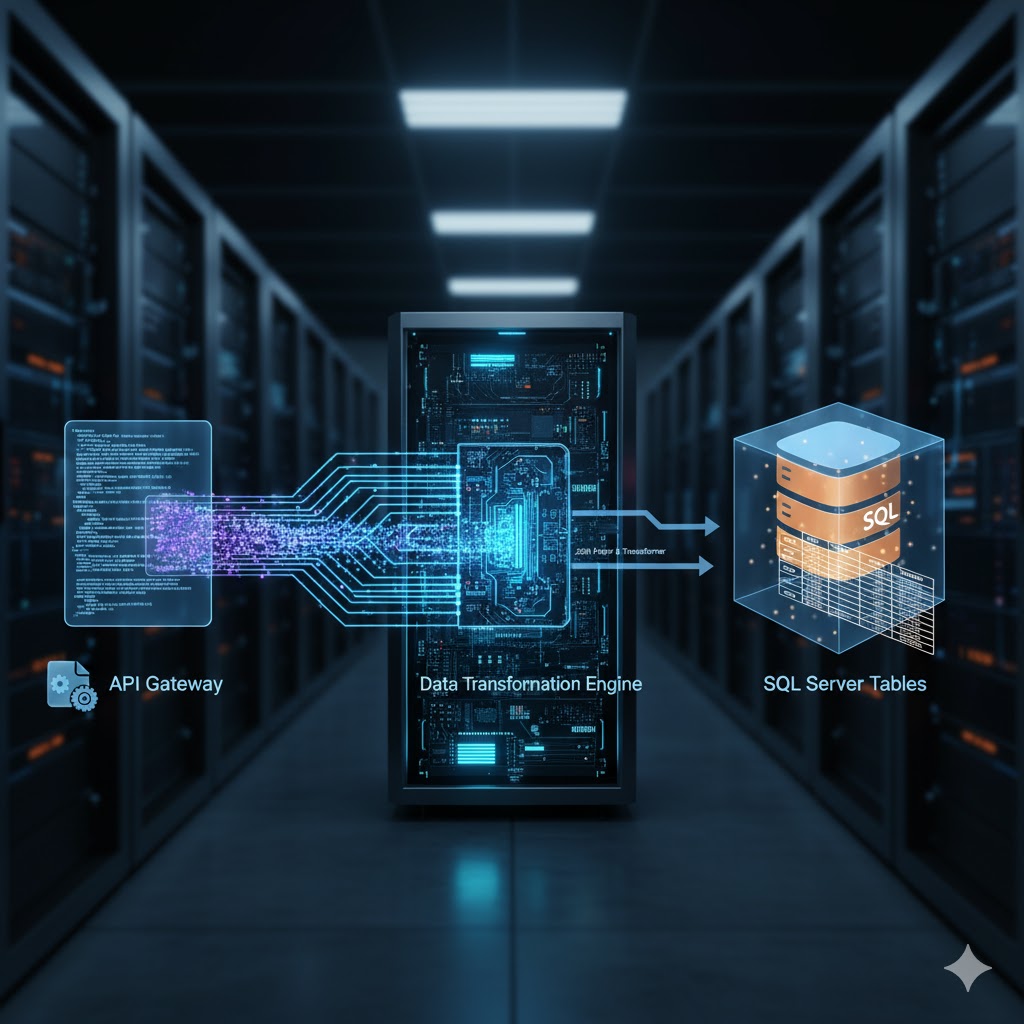
In modern data-driven ecosystems, organizations rely heavily on APIs as a primary source of operational and analytical data. These APIs often deliver responses in JSON format because it is lightweight, flexible, and easy for machines to parse. However, SQL Server—one of the most widely used relational database systems—requires structured, tabular data for storage and analysis. Bridging the gap between JSON responses and SQL Server tables is a critical responsibility for data engineers, ETL developers, and backend integrators.

Processing JSON API data into SQL Server tables involves thoughtful design, careful data modeling, and robust automation. This article explores the key considerations, challenges, and best practices that ensure a smooth and reliable data pipeline.

Why JSON APIs Are Becoming Universal

As cloud services, SaaS tools, and microservice architectures expand, more systems expose their data through RESTful APIs. JSON has become the default format for these responses due to its:

  • Lightweight nature

  • Human-readable structure

  • Nesting capabilities

  • Compatibility with web and mobile applications

However, the same flexibility that makes JSON appealing also introduces complexity when storing it in relational systems like SQL Server.

Common Challenges When Moving JSON into SQL Server

  1. Hierarchical and Nested Structures
    JSON objects can contain arrays, deeply nested objects, and varying structures. SQL tables, by contrast, require well-defined columns and data types.
  2. Data Type Mismatches
    JSON responses may include mixed data types, dynamic fields, or optional attributes. SQL Server expects consistent schema definitions.
  3. Evolving API Schemas
    APIs frequently introduce new fields or modify existing ones. Rigid table structures must be updated or designed with flexibility in mind.
  4. Variable Response Sizes
    API responses may contain partial, paginated, or incomplete data. Integrating them into SQL Server requires validation and consistency checks.
  5. Automation and Scheduling
    Most organizations need API-to-database ingestion to run daily or even multiple times per hour. This requires a pipeline capable of handling failures, retries, and incremental updates.

Key Steps in Processing JSON API Data

  1. Understanding the API Structure
    Before designing any tables, developers must examine the API documentation and sample responses. Important considerations include:
  • Endpoints and URLs

  • Pagination rules

  • Authentication requirements

  • Mandatory versus optional fields

  • Nested relationships

A clear understanding helps determine whether multiple SQL tables are necessary to represent the data correctly.

  1. Designing a Relational Schema
    Since JSON structures rarely map cleanly into a single table, you may need a combination of:
  • A parent table for top-level fields

  • Child tables for nested objects or arrays

  • Lookup tables for repeated values

  • Audit tables for tracking ingestion times and raw responses

A good schema reflects the API’s hierarchy while ensuring relational integrity.

  1. Normalization vs. Flexibility
    When mapping JSON to SQL Server, teams must balance between:
  • Normalization: splitting data into multiple related tables

  • Flexibility: storing raw JSON for future use

Some organizations choose a hybrid model, storing both structured data and the original JSON payload for reference.

  1. Validating the API Data
    Before inserting into SQL Server, the data must be checked for:
  • Missing required fields

  • Unexpected null values

  • Invalid formats (dates, numbers, identifiers)

  • Duplicate records

Strong validation prevents corrupt or inconsistent data from entering the system.

  1. Transforming JSON Into SQL-Ready Format
    Transformation includes flattening nested structures, converting types, cleaning fields, and enriching data before it reaches SQL Server.

Common transformations include:

  • Extracting fields from nested arrays

  • Mapping keys to column names

  • Handling timestamps and timezone normalization

  • Removing or renaming fields for consistency

Loading Data into SQL Server

Once the JSON has been validated and transformed, the loading process must be reliable and repeatable. Key considerations include:

Incremental Loads:
Most APIs provide timestamps or pagination tokens. Using these helps you insert only new or changed records instead of reprocessing everything.

Upserts (Insert + Update):
API records often change over time, so implementing upsert logic ensures SQL Server always reflects the latest state.

Error Handling and Retry Logic:
Network issues, API rate limits, or server failures can interrupt the process. A robust pipeline should log failures and retry intelligently.

Archiving:
Many teams store raw JSON in a separate table or data lake for auditing, reprocessing, or debugging.

Best Practices for a Reliable API-to-SQL Pipeline

  • Keep a copy of the raw API response for traceability.

  • Automate the workflow with a scheduler or ETL orchestrator.

  • Track ingestion timestamps and metadata for auditing.

  • Monitor schema changes in the API and adjust SQL structures accordingly.

  • Implement alerts for failed or partial loads.

  • Validate data before insertion to avoid corrupted tables.

Conclusion

Processing JSON API data into SQL Server tables is an essential task for modern data engineering teams. Although JSON’s flexible structure is different from SQL Server’s strict relational model, the challenges can be addressed through careful schema design, strong validation, and robust automation.

A well-built JSON ingestion pipeline allows organizations to transform raw API responses into clean, reliable, query-ready datasets—powering analytics, reporting, and business intelligence with confidence.